An intelligent briefing system that turns hundreds of pages of board papers into the decisions executives need to walk in ready.
Board AI: intelligent briefing interface on desktop
Board members were spending meeting time reading, not deciding.
KPMG's executive leadership and board directors arrive at board meetings having received hundreds of pages of board papers, financial briefings, and KPI reports in the days before. In practice, few had time to read everything, which meant valuable session time was lost to catching up on information that should have arrived pre-digested. Questions came up mid-meeting that required someone to manually locate data across multiple documents, and follow-up actions slipped through the cracks because tracking them was entirely manual.
"By the time we get to the strategic discussion, half the meeting is gone. We've spent it on things the AI could have summarized before we walked in."
Executive Director, KPMG GlobalLight-touch research, clear signal
Given the executive audience and project timeline, we kept research focused: a small set of stakeholder conversations with board directors, governance leads, and executive assistants to validate the core problem and identify the moments where AI could add the most value without disrupting how meetings already ran.
Preparation is aspirational,
not actual
Every director intended to read the full board pack. None consistently did. The design had to deliver value from zero preparation, not just the ideal case.
Real-time questions need
real-time answers
Mid-meeting questions about financials or prior decisions routinely stalled progress. Directors wanted answers surfaced from the documents already in the room.
Trust requires a visible source
Directors were skeptical of AI summaries until they could see exactly where the information came from. Source visibility was the prerequisite for every other feature to matter.
Action items have no structured home
Decisions made in the meeting had no path from verbal agreement to tracked action. Follow-through between board cycles was entirely informal and inconsistent.
Less time reading. More time deciding.
Board AI is an immersive intelligence platform built for executive board meetings. It surfaces the right information at the right moment: before the meeting starts, during live discussion, and in follow-up, without requiring directors to change how they already run their sessions.
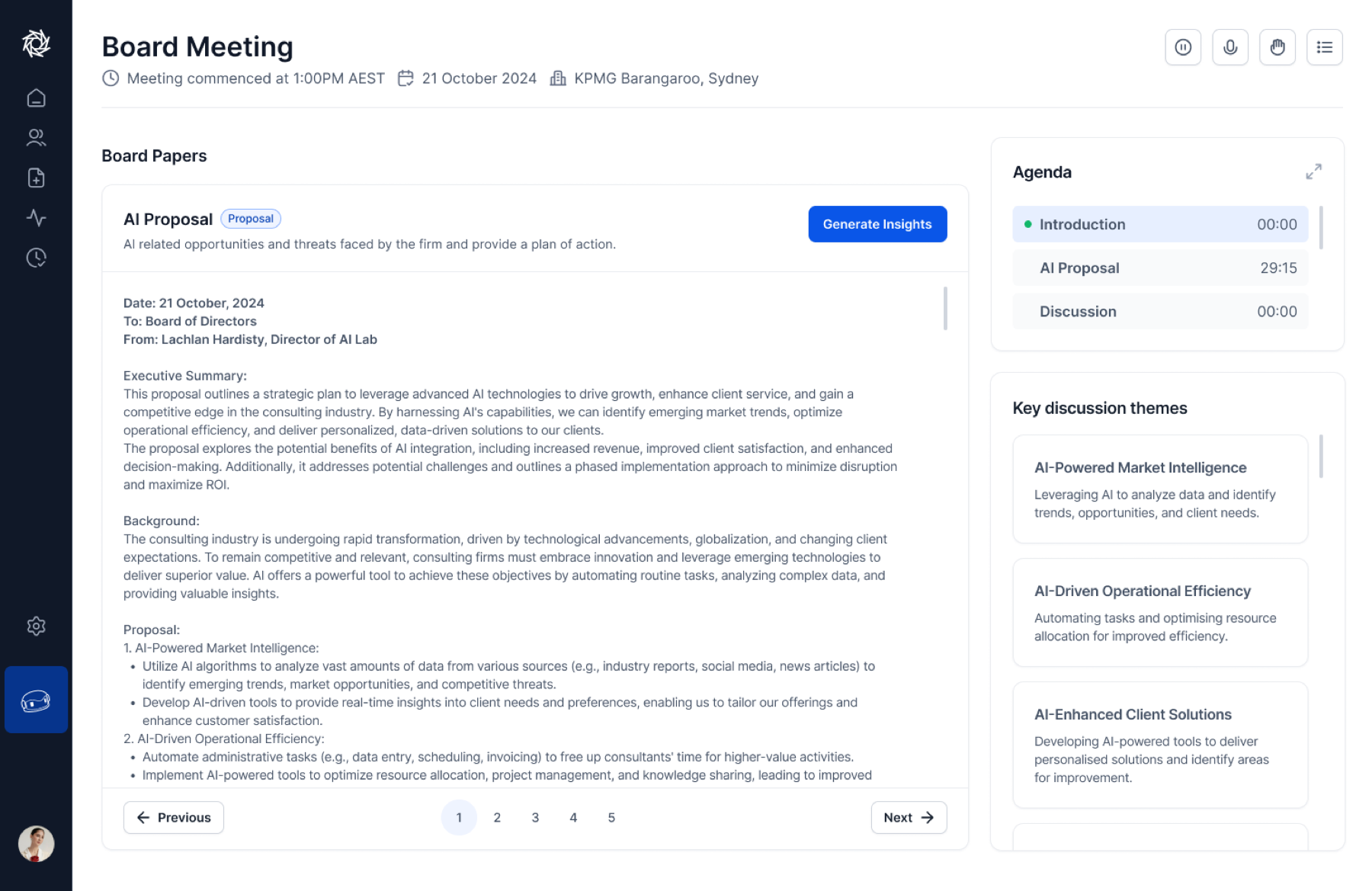
Board Paper: full document view with AI-generated insight summary, key discussion themes, and agenda context
Board paper with generated insights
Directors can open any board paper within the platform and trigger AI-generated insights with a single click. The AI reads the full document and surfaces the most material points, flagging changes from previous meetings and highlighting open questions that require board input. Every summary links back to its source paragraph so directors can verify before they rely.
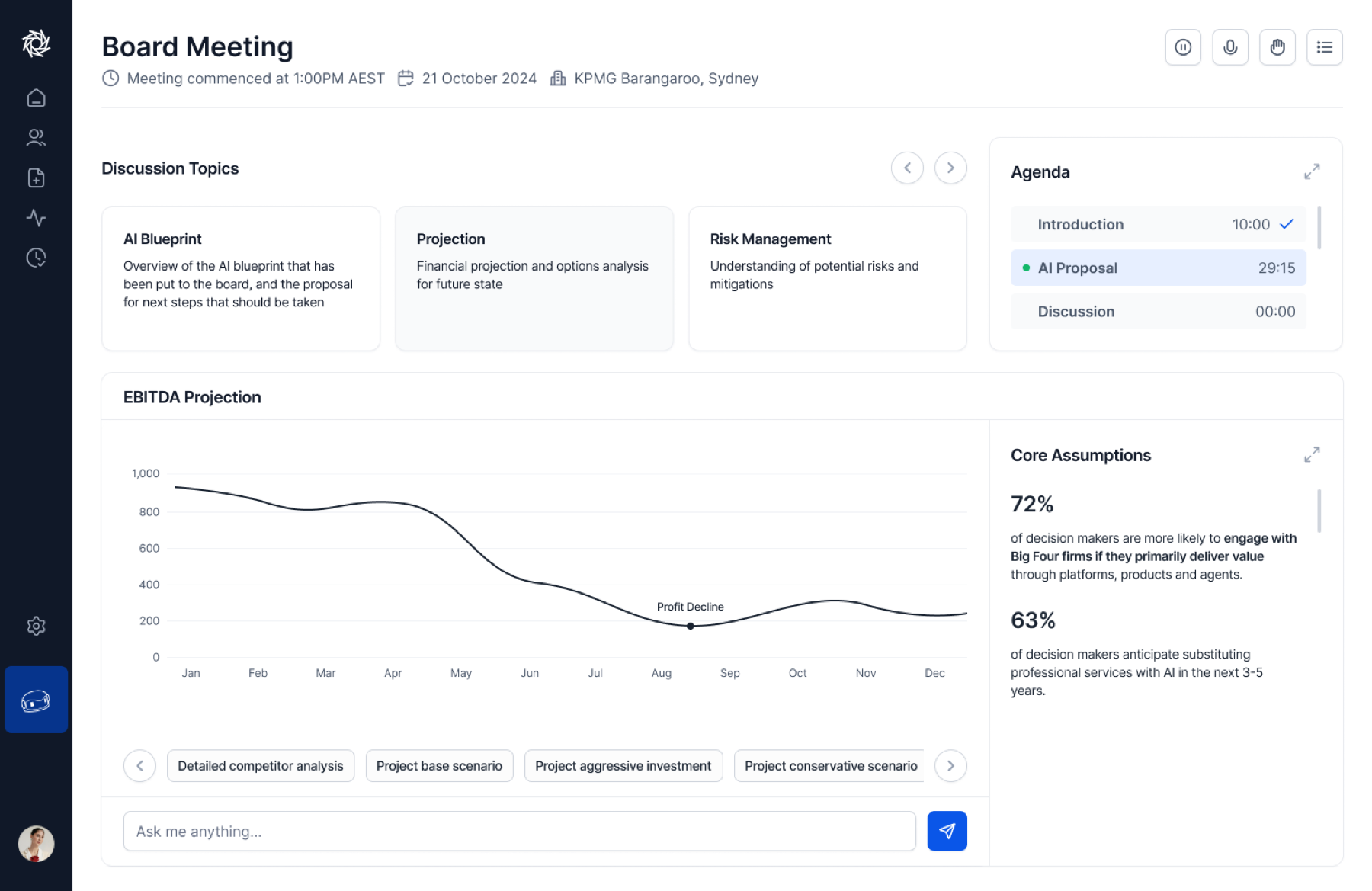
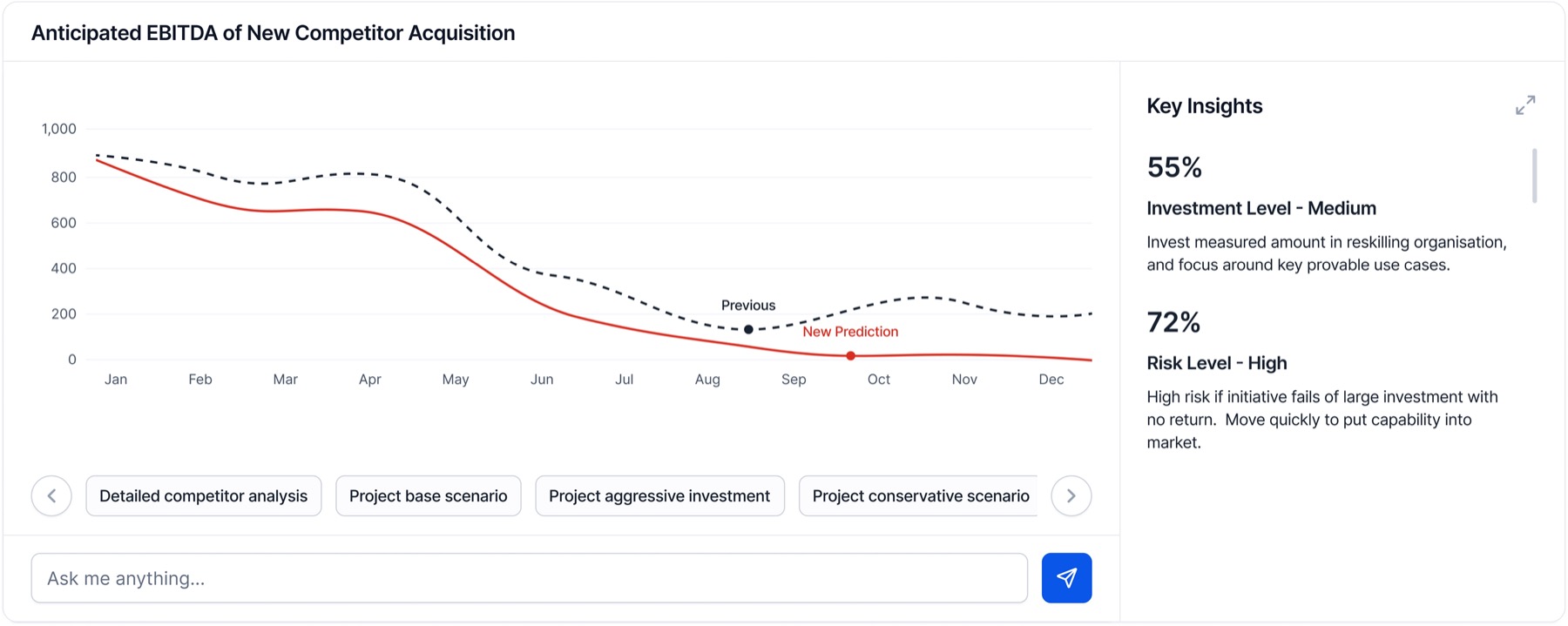
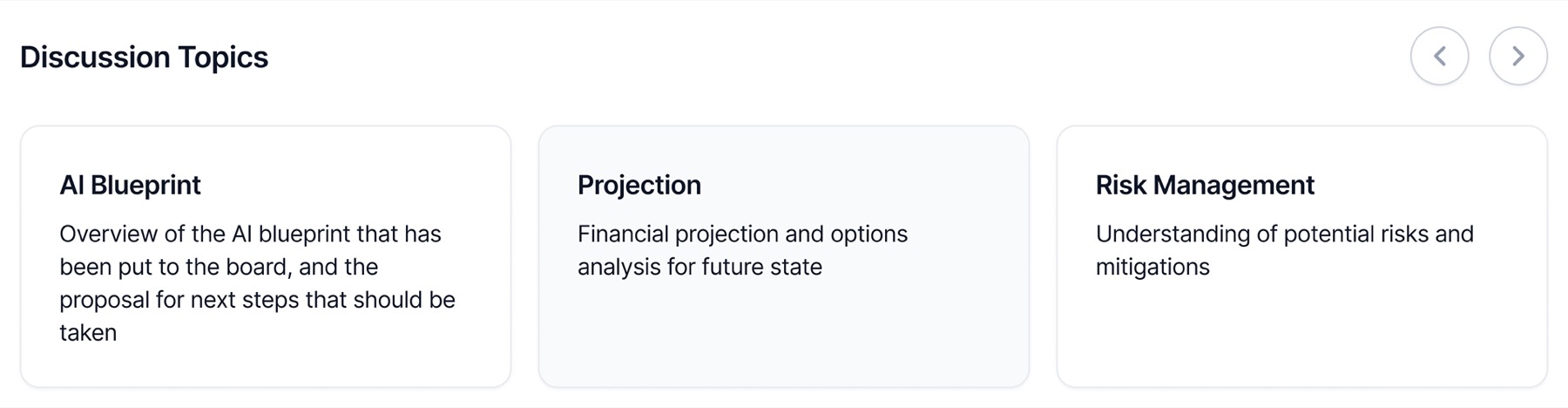
Board View: discussion topics, live agenda tracking, EBITDA projection, core assumptions, and natural language query
Discussion topics and live agenda
The board view surfaces the meeting's discussion topics with brief framing summaries alongside a live agenda panel tracking which item is active and how much time has elapsed. AI-surfaced core assumptions (market stats drawn from submitted board papers) give directors shared context without requiring anyone to have read the full pack in advance.
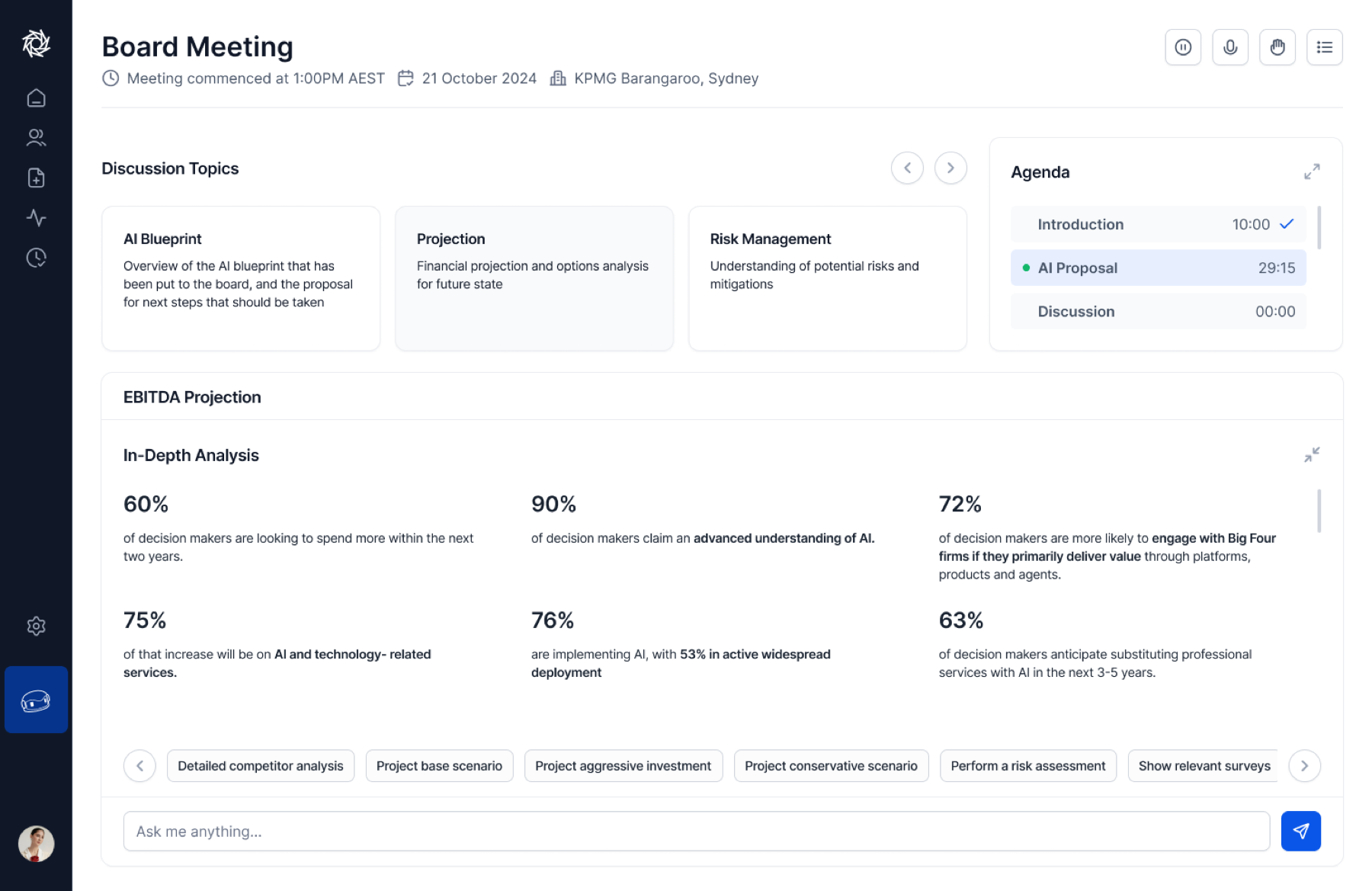
Board View Expanded: full in-depth analysis mode with six AI-surfaced data points, suggested prompts, and chat interface
Expanded analysis and natural language query
When a topic is selected, the view expands into a full in-depth analysis panel surfacing quantitative intelligence from board papers and market data. Contextual suggested prompts like "Detailed competitor analysis," "Project aggressive investment," and "Perform a risk assessment" let directors go deeper without knowing how to ask. Free text chat is available for anything the prompts don't cover.
Designing the Board AI logo
Alongside the product, I designed the Board AI logo: a rotating aperture motif that references the precision of a camera lens and the idea of focusing attention on what matters. The logo was built as an animation with four states, giving it a sense of motion and intelligence when used in the product's intro experience and loading moments.
The logo draws on KODAK's visual heritage, using the aperture as a symbol of clarity and capture, and adapts it for an AI context where the product is constantly synthesizing and surfacing information. Four states cycle through a subtle rotation, suggesting continuous intelligence without feeling mechanical or distracting.
Built for density and trust
Board AI required a component set tuned for information-dense environments where every element has to earn its space. The card, alert, and graph components were designed to surface the right signal without overwhelming a director who might have seconds, not minutes, to orient. Cards organize layered content into a scannable format. Alerts communicate urgency without disrupting flow. Graph components translate complex financial or performance data into glanceable visuals, keeping the AI's outputs legible at a meeting pace.
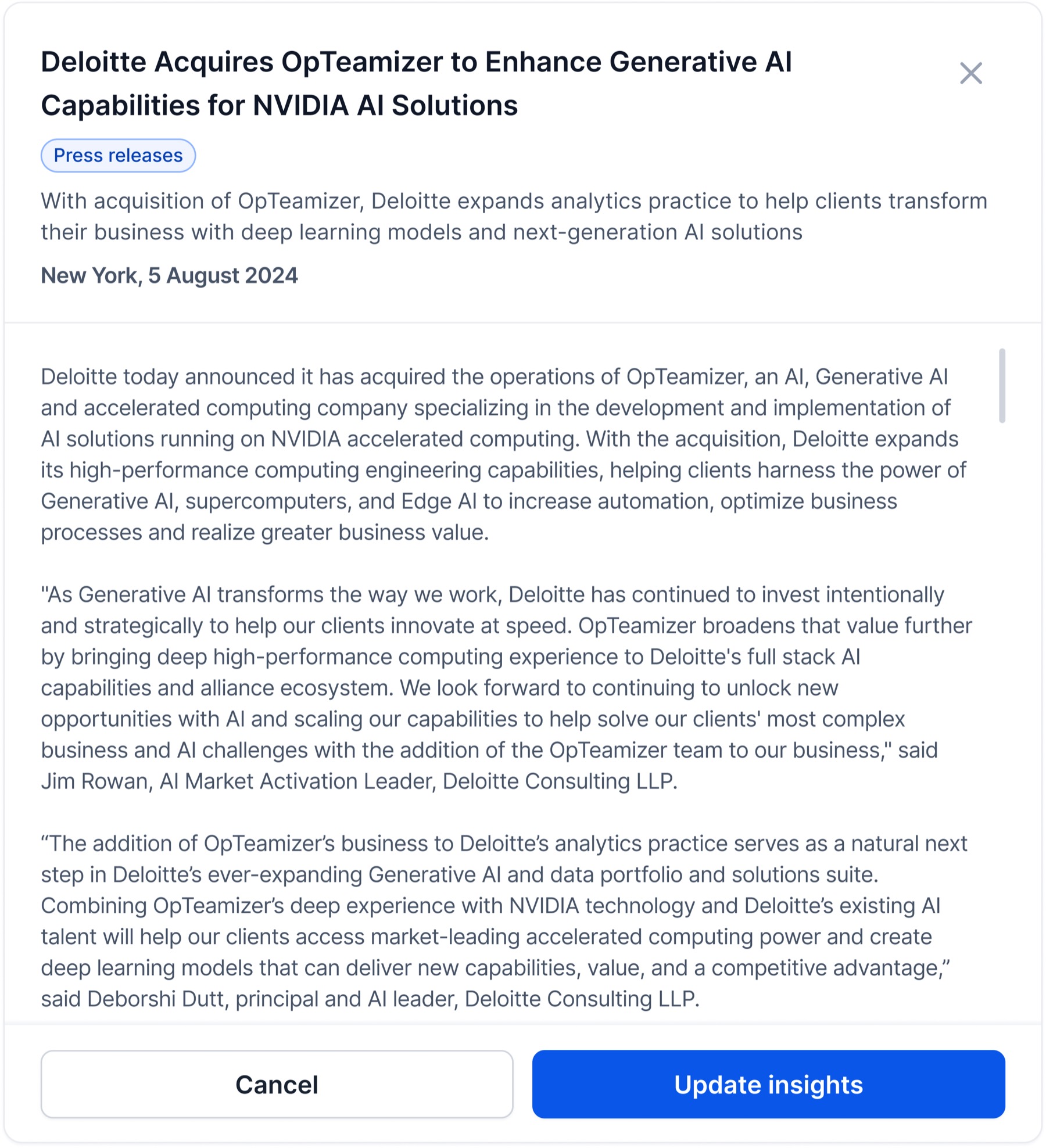


What this taught me
Design for the unprepared user, not the ideal one. Executives are chronically time-poor. A board AI that only works when directors have done full pre-reading is a luxury, not a tool. The design had to deliver value from zero preparation and more value from thorough preparation, simultaneously.
Trust at the executive level is a higher bar. Board directors are experienced pattern-matchers. AI-generated summaries were only trusted when the source was visible and navigable. The citation layer wasn't a feature; it was the prerequisite for every other feature to matter.
Ambient AI works better than active AI in meeting contexts. An AI that surfaces information when it's relevant and stays quiet otherwise was far better received than one that offered continuous analysis. In a board meeting, attention is the scarcest resource. The design had to respect that.